By: Daphne Lye, CFP
Senior Lead, Solutions, Research & Investment, MoneyOwl
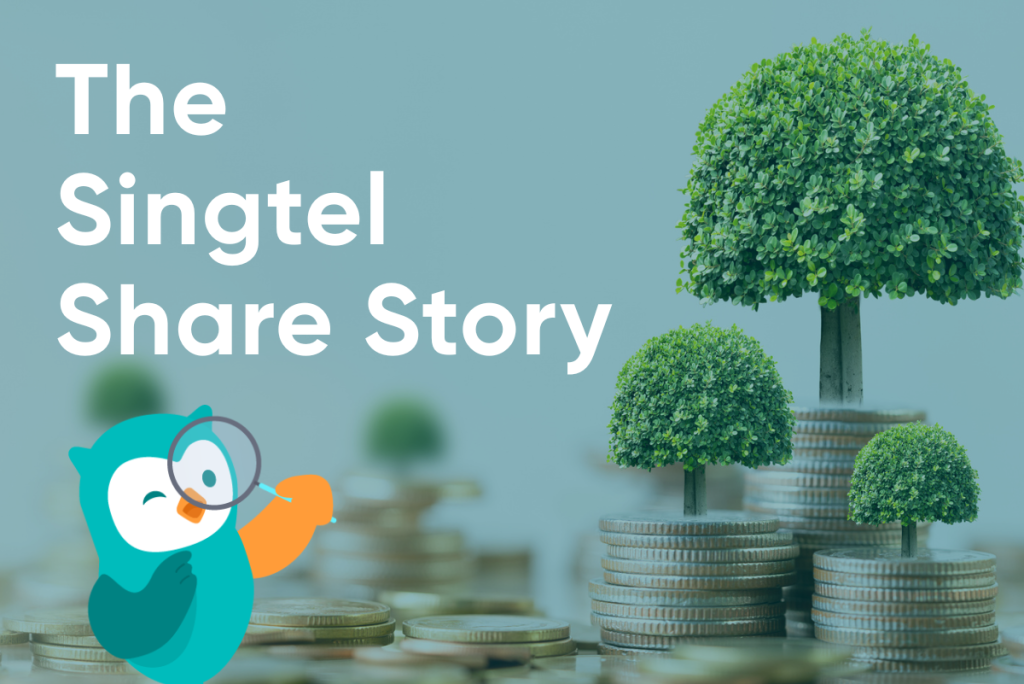
The recent announcement that Singtel and CPF Board are transferring Special Discounted Shares (SDS) to 615,000 investors’ individual Central Depository (CDP) accounts has brought a 30-year investment journey into the spotlight.
How it started: Back in 1993 and subsequently 1996, there were two exercises held where Singaporeans could buy SDS using their CPF savings, with CPF Board acting as the trustee. This arrangement was designed to give Singaporeans a stake in the nation’s economic growth, so that even those who lacked the confidence or knowledge to invest independently could participate with ease.
The situation today: Singaporeans are now more familiar with investments, hence the special trustee arrangement with the CPF Board is no longer needed. Transferring the shares to members’ personal CDP account gives them direct ownership and full control over their investment.
The move is being formalised through a parliamentary bill introduced on 7 April 2026. If passed, the transfer is scheduled for 21 November 2026 when shareholders will get full and direct control over their assets.
For those who bought the shares back then, an initial investment of about $2,000 would have grown into a holding worth approximately $6,800 today, plus around $5,000 in cumulative dividends.
These together translate to a respectable annualised return of about 5.5%[1]
When you look at how this gave investors a 5.5% annualised return including attractive dividends, this may seem like it was a good move made back in 1993 and 1996.
But how much should we place our bets on a single stock? Should we still use our CPF OA monies to invest in Singtel shares right now?
Let’s break it down:
The Danger of Putting All Your Eggs in One Basket
For every success story like Singtel, there are companies that have gone through significant ups and downs.
For example, there was a local audio-visual company that was listed on the SGX in 1994 and was once one of the top-performing stocks on SGX, reaching close to $60 in 2000.
Today, its share price has fallen to under $1.
Even for Singtel, much of its share price gains came in 2025.
In January 2024, the price was less than half of what it is now. [2]
The volatility of a single share price highlights a critical investment principle: the risk of poor diversification.
A single company’s fortunes can change unexpectedly due to market shifts, management decisions, or unforeseen events.
The Key Message: Diversification is Your Best Defence
A “buy and hold” strategy is most effective when applied to a globally diversified portfolio.
By spreading your investments across thousands of companies, different industries, and various geographical regions, you insulate yourself from the potential failure of a single stock.
If one company performs poorly, its impact on your overall portfolio is minimised.
Should You Invest Your CPF Ordinary Account (OA)?
This leads to another common question: should you use your CPF OA savings to invest?
After all, the people who invested in these Singtel shares earned an average of 5.5% per annum – well above the current CPF OA risk-free rate of 2.5% per annum.
But not every stock performs well, and it is difficult to find an investment that will give you a risk-free rate like CPF does.
So before you decide to invest these funds, consider the following:
- Your Risk Appetite and Time Horizon: Are you comfortable with the possibility of losing money? Investments can be volatile, and their value can go down as well as up in the short term.
Furthermore, you should have an investment horizon of at least eight years and be able to withstand market fluctuations. - Buffer for Housing Payments: If you are still using your OA for monthly mortgage instalments, make sure to set aside enough in your OA to cover these essential payments before considering investing the excess.
We recommend keeping a buffer of $20,000 or 6 months’ worth of mortgage payments in your OA in case of an unexpected job loss. - The CPF Special Account (SA) Alternative: Instead of investing your OA funds, consider transferring them to your CPF SA up to the current Full Retirement Sum.
The SA offers a high risk-free interest rate, currently at 4% per annum.
In addition, the first $60,000 of combined CPF balances earns an extra 1% interest, bringing the potential return on your SA funds to 5% per annum without any market volatility.
However, do note that OA transfers into the SA are irreversible.
If you have considered the above criteria and still wish to invest your OA, MoneyOwl recommends staying invested in a low-cost, globally diversified portfolio with an asset allocation suited to your risk appetite.
While the Singtel SDS story is a valuable reminder of the power of long-term investing, it is important to remember not to chase individual stock winners.
Instead, focus on building a resilient and diversified investment portfolio that can stand the test of time.
Want to start investing?
Explore MoneyOwl’s approach to investing where you can get tailored investment solutions and guidance on constructing your own portfolio here:
Other Key Questions from the Singtel SDS Exercise
How can I know if I (or my parents) hold these shares?
You can find out how much shares you own at this site: https://sds.singtel.com/ by logging in with your Singpass. Otherwise, you can look out for an official letter from the CPF Board and Singtel, which will be sent out by the end of April 2026.
Should I sell my Singtel shares?
The decision to sell depends entirely on your individual financial situation and goals.
- If you have not met your retirement needs: You can opt to withdraw the sales proceeds to either cover immediate urgent needs or top up your CPF Retirement Account.
Doing the latter will help build up your retirement funds with up to 6% per annum and give you higher monthly payouts for life under the CPF LIFE annuity scheme. - If you have enough for retirement and are above 55 and have met your Full Retirement Sum (FRS): You can sell the shares to build up your emergency funds in your CPF Ordinary Account, which earns a base rate of 2.5% per annum and can be withdrawn anytime.
- If you have met your FRS and are already globally diversified across most of your investments, and you have confidence in Singtel as a company and would like to receive some additional dividend income, holding onto the shares to receive dividends might be an option worth considering.
Disclaimer: While every reasonable care is taken to ensure the accuracy of information provided, no responsibility can be accepted for any loss or inconvenience caused by any error or omission. The information and opinions expressed herein are made in good faith and are based on sources believed to be reliable but no representation or warranty, express or implied, is made as to their accuracy, completeness or correctness. All investments carry risk. Expressions of opinions or estimates should neither be relied upon nor used in any way as indication of the future performance of any financial products, as prices of assets and currencies may go down as well as up and past performance should not be taken as indication of future performance. The author and publisher shall have no liability for any loss or expense whatsoever relating to investment decisions made by the reader.
This publication has not been reviewed by the Monetary Authority of Singapore.
Appendix:
[1] This is an approximation for illustration purposes only and actual returns may differ.
[2] Singtel’s share price was $2.41 on 12 January 2024 and $5.03 on 6 April 2026, which would have translated to a much lower annualised return even after accounting for dividends.